

A smart home earns its place when it makes the day easier. Lights illuminate your path before you reach for a switch. Shades open with your morning routine. The temperature adjusts ahead of your arrival. Thoughtfully programmed automation lets your home respond to your schedule and the way you live, without requiring a command for every action.
Apple’s HomeView announcement invites a closer look at how that experience comes together. For residential integrators, our view is that it could bring more homeowners into the conversation—and raise their expectations for how naturally technology should fit into their homes.
What Is Apple HomeView?
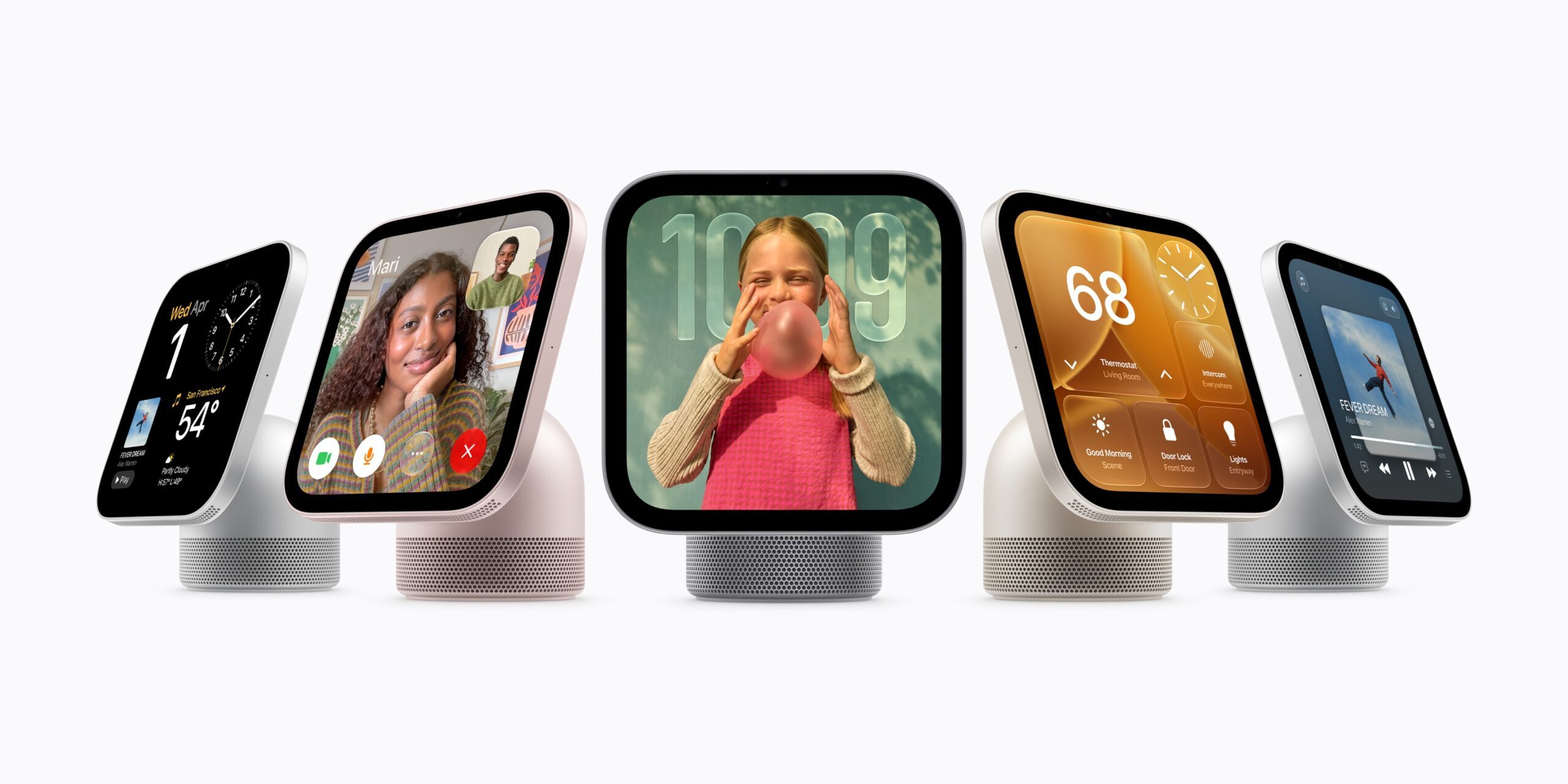
HomeView is Apple’s new 7-inch smart display, combining entertainment, communication, and smart home controls. Available in tabletop and wall-mounted versions, it lets users interact with compatible accessories through touch or Siri AI, including viewing cameras and controlling lights, thermostats, locks, and shades. It supports Works with Apple Home and Matter accessories. [1]
Apple also announced Home Collection: cameras, a video doorbell, a smart lock, thermostats, and sensors developed with LG Electronics and Schneider Electric. These accessories are managed through the Apple Home app without a separate manufacturer app or account. [2]
Some functions extend beyond responding to a command. Apple’s Adaptive Temperature, for example, adjusts compatible thermostats based on whether household members are home, away, or winding down for the night. [2]
How Could This Change the Smart Home Market?
Our view is that Apple’s expansion could make home automation feel more approachable to people already comfortable with its ecosystem. A homeowner might begin with a display or doorbell, then become interested in coordinating more of the home.
That could also influence expectations. Once someone experiences convenient control in one room, they may start asking how lighting, climate, entertainment, and access could work together throughout the property.
CE Pro identifies HomeView’s dedicated control interface as a significant addition to Apple’s smart home offering. For integrators, that makes it a development worth understanding as clients explore their options. [3]
What Can the Products Do, and What Does an Integrator Add?
Connected products give homeowners specific capabilities. Professional integration brings those capabilities into a plan for the home.
An integrator considers how people use each space, which systems need to work together, where controls belong, and how routines should operate. That work can include coordinating infrastructure with the builder, programming schedules and scenes, and helping household members use the finished system.
Apple’s announcement gives homeowners another option to evaluate. The integrator’s role is to explain where that option fits, what its requirements are, and how it relates to the broader experience the homeowner wants.
A Consumer Launch Creates a Support Conversation
Apple is marketing these products directly to consumers. Its announcements confirm direct ordering, and Apple Retail will offer paid third-party installation through ADT in the United States. The launch materials do not establish an independent integrator wholesale program or distributor release date. [1, 2]
For independent integrators, one potential opportunity is supporting homeowners who purchase the products themselves.
A client may ask for help understanding compatibility, configuring household access, incorporating a device into an existing installation, or troubleshooting unexpected behavior. Being prepared for those conversations starts with knowing what the products support and where manufacturer assistance is required.
It also means defining the service clearly: what the integrator can assess, configure, and support, and how that work is priced. A consumer purchase does not automatically come with an ongoing support relationship.
How Integrators Can Stay Ahead
Staying ahead starts with understanding what these products need to perform well. Simple setup still depends on reliable connectivity and compatible equipment. HomeView needs a supported way to communicate with the systems it controls; existing lights and HVAC equipment do not become connected simply by adding a display. For heating and cooling, a compatible smart thermostat may provide that connection. [2, 4]
Lighting illustrates why understanding the installation matters. GE Lighting explains that a smart bulb needs power to remain available for app or voice control. If someone turns off its conventional wall switch, those controls become unavailable. For integrators, knowing how bulbs, switches, and controls work together helps us configure the system around everyday use and troubleshoot when it behaves differently than the homeowner expects. [5]
For integrators, preparation means learning the compatibility requirements, evaluating network readiness, and developing hands-on experience with setup and troubleshooting. It also means learning the supported apps and bridges that can connect other systems to Apple Home and testing which functions those connections make available.
Thoughtful programming adds another layer of value. Schedules, occupancy triggers, and coordinated scenes can help technology respond to how a household lives. As the new lineup reaches more homes, practical experience will help integrators understand its capabilities and any limitations that emerge.
At ForTech Solutions, our perspective is that product knowledge, thoughtful programming, and clearly defined support services help us stay ready for homeowners who purchase these devices themselves. Educating clients about what their products can do and what their home needs to support them is part of that service.
When Will the Products Be Available?
HomeView preorders opened October 13, 2026, with availability beginning November 13. Both models start at $299 in the United States; wall mounts are sold separately. The PoE wall mount follows in early 2027. [1]
Apple says Home Collection availability begins in December 2026, with select accessories arriving in early 2027. CE Pro lists a broader 2027 timeframe; this post follows Apple’s official schedule. Product release dates should not be treated as confirmed availability through integrator distribution. [2, 3]
What do you think Apple’s latest launch will change most for integrators: demand for system design, requests for support, or homeowners’ expectations of both?
Sources
[1] Apple: Meet Apple HomeView, October 13, 2026.
[2] Apple: Introducing Apple Home Collection, October 13, 2026.
[4] Apple Support: Pair and Manage Your Matter Accessories.
[5] GE Lighting: How Do Smart Bulbs Work with Switches (Regular or Smart)?, September 20, 2023.